
Safety 1st EverFit All-in-One Car Seat Manual: A Comprehensive Guide
This detailed guide comprehensively covers the Safety 1st EverFit All-In-One Car Seat, ensuring optimal child safety and comfort throughout various growth stages.
Understanding installation, harness usage, maintenance, and safety features is crucial for proper operation and maximizing protection for your little one.
The manual provides critical safety checks and troubleshooting, preventing common errors during installation and usage, offering peace of mind on every journey.
The Safety 1st EverFit All-in-One Car Seat represents a commitment to child passenger safety, offering a versatile solution that adapts as your child grows. This convertible car seat is designed to provide years of reliable use, transitioning seamlessly from a rear-facing harness for infants, to a forward-facing harness for toddlers, and finally to a booster seat for older children.
Understanding the EverFit’s features and proper usage is paramount to ensuring your child’s protection. The accompanying manual serves as a vital resource, detailing everything from installation procedures to harness adjustments and maintenance guidelines. It’s engineered with a focus on simplicity and ease of use, while never compromising on safety standards.
This guide will help you navigate the EverFit’s capabilities, empowering you to make informed decisions about your child’s car seat safety. Prioritizing a thorough review of the manual before initial use is highly recommended, guaranteeing a secure and comfortable travel experience for your precious passenger.
Understanding the 3-in-1 Convertible Design
The Safety 1st EverFit’s core strength lies in its adaptable 3-in-1 convertible design, offering exceptional value and longevity. This innovative feature allows the car seat to evolve with your child, eliminating the need for frequent upgrades as they grow. Initially, it functions as a rear-facing car seat, providing crucial protection for infants and young toddlers.
As your child reaches the appropriate size and age, the EverFit seamlessly converts to a forward-facing car seat with a five-point harness. This configuration offers continued security for growing toddlers and preschoolers. Finally, when your child is ready, the harness can be removed, transforming the seat into a belt-positioning booster seat.
The manual provides detailed instructions for each conversion stage, ensuring proper installation and usage. Understanding these transitions is key to maximizing the EverFit’s safety benefits and providing years of comfortable, secure travel for your child.

Importance of Reading the Manual
Prior to installing or using the Safety 1st EverFit All-in-One Car Seat, thoroughly reading the accompanying manual is absolutely essential. This isn’t merely a suggestion; it’s a critical step in ensuring your child’s safety and well-being during every journey. The manual contains vital information regarding proper installation techniques for both rear-facing and forward-facing modes, as well as booster seat configuration.
It details specific weight and height restrictions for each stage, preventing premature or improper transitions. Furthermore, the manual outlines crucial safety checks, including harness adjustments and buckle operation, to guarantee a secure fit. Ignoring these instructions could compromise the car seat’s protective capabilities.
Understanding the manual’s guidance optimizes the EverFit’s features and maximizes your child’s protection and comfort, offering peace of mind with every ride.

Installation Procedures
Proper installation is paramount for child safety; the manual details rear-facing, forward-facing, and booster modes, utilizing both LATCH and seat belt systems effectively.
Rear-Facing Installation
Rear-facing installation is the safest position for infants and young toddlers, and the Safety 1st EverFit manual provides detailed guidance. Begin by locating a secure vehicle seat with a compatible LATCH system or seat belt. Ensure the car seat is reclined at the appropriate angle, indicated by the level indicator on the car seat itself, to maintain a safe head and chest position for the child.
When using the LATCH system, connect the lower anchors firmly to the vehicle’s anchor points, then tighten the straps. If using the seat belt, route it correctly through the designated belt path and lock the seat belt to secure the car seat. Always double-check the installation to ensure it’s tight and doesn’t move more than one inch side-to-side or front-to-back. Refer to the manual for specific diagrams and instructions related to your vehicle model for optimal safety.
Remember to always consult the vehicle owner’s manual for compatibility and specific installation instructions.
Forward-Facing Installation
Transitioning to forward-facing requires careful attention to the Safety 1st EverFit manual’s instructions. Ensure your child meets the weight and height requirements for forward-facing use. Begin by securely attaching the car seat using either the LATCH system or the vehicle’s seat belt, following the diagrams provided in the manual.
When using the LATCH system, connect the upper and lower anchors, tightening the straps until the car seat is firmly installed with minimal movement. If utilizing the seat belt, thread it through the correct belt path and lock it to ensure a secure fit. Verify the car seat doesn’t exceed the allowable movement – less than one inch side-to-side or front-to-back – for optimal safety.
Always double-check the installation and consult both the car seat and vehicle owner’s manuals for specific guidance related to your vehicle model.
Booster Seat Mode Installation
Converting the Safety 1st EverFit to booster mode is a straightforward process, detailed in the manual. First, remove the five-point harness and store it securely within the car seat. Ensure the vehicle’s seat belt fits correctly across your child’s shoulder and lap – never across the neck or face.
Proper positioning of the seat belt is crucial for effective protection. The lap belt should lie low and snug across the upper thighs, while the shoulder belt should cross the middle of the shoulder. Adjust the vehicle’s shoulder belt height if necessary to achieve the correct fit.
Verify the car seat is stable and doesn’t move excessively. Always refer to the manual and your vehicle’s owner’s guide for specific instructions and compatibility information.
LATCH System Installation Guide
The Safety 1st EverFit utilizes the LATCH (Lower Anchors and Tethers for Children) system for a secure installation. Locate the lower anchor connectors on the car seat and align them with the corresponding lower anchors in your vehicle. Ensure a firm connection by pushing the connectors until they click securely into place.
Next, attach the top tether to the designated anchor point in your vehicle. This tether significantly reduces forward movement in a crash. The manual provides detailed diagrams illustrating proper tether attachment.
Confirm a snug fit by testing the car seat’s movement. It should not move more than one inch side-to-side or front-to-back at the belt path. Always consult your vehicle’s owner’s manual for LATCH weight limits and specific anchor point locations.
Seat Belt Installation Guide
When installing the Safety 1st EverFit using the vehicle’s seat belt, ensure the belt is threaded through the correct belt path as indicated in the manual. The path varies depending on whether the seat is rear-facing or forward-facing. Lock the seat belt by engaging the locking latch plate – consult your vehicle’s owner’s manual for specific locking instructions.
After threading and locking the seat belt, firmly press down on the car seat while pulling the belt tightly to eliminate any slack. A snug installation is crucial for optimal protection. Verify the seat doesn’t move more than one inch side-to-side or front-to-back at the belt path.
Remember to always double-check the belt path and locking mechanism before each use. Proper seat belt installation is vital for the car seat’s effectiveness in a crash.
Harness and Buckle Usage
Proper harness tightening, buckle operation, and height adjustments are essential for securing your child safely within the Safety 1st EverFit car seat.
Always perform safety checks to ensure a secure fit, and correctly position the chest clip for optimal protection during travel.
Proper Harness Tightening
Achieving a snug and secure harness fit is paramount for your child’s safety within the Safety 1st EverFit All-In-One Car Seat. The harness straps must lie flat against your child’s shoulders and hips, without any slack or twisting. Begin by placing your child in the car seat and securing the harness straps over their shoulders.
To tighten the harness, pull the adjustment strap located at the base of the car seat. Continue pulling until the straps are firmly snug – you should not be able to pinch any excess webbing at the shoulder. Perform the “pinch test” by attempting to pinch the harness webbing at the child’s shoulder; if you can pinch any material, the harness needs further tightening.
Remember that clothing can compress in a crash, so a snug fit is crucial. Avoid bulky clothing or padding under the harness. Regularly check the harness tightness, especially before each journey, to ensure continued safety and comfort for your growing child.
Buckle Operation and Safety Checks
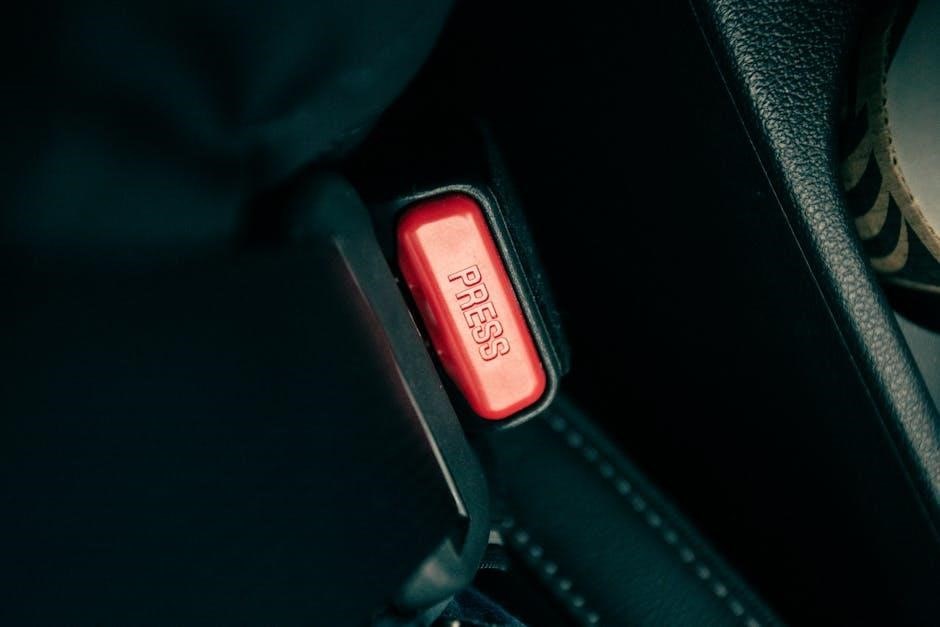
The Safety 1st EverFit utilizes a straightforward buckle system designed for ease of use and maximum security. To fasten the buckle, insert the harness straps into the buckle receiver until a distinct “click” sound is heard, confirming a secure connection. Always verify that both sides of the buckle are fully engaged before each trip.
To release the buckle, press the red release button located on the buckle receiver. Ensure the harness straps are completely free after releasing the buckle. Regularly inspect the buckle for any damage, cracks, or loose parts. If any issues are detected, discontinue use and contact Safety 1st customer support.
Perform a safety check after buckling your child: ensure the harness straps are not twisted, and the chest clip is positioned correctly. A properly functioning buckle is vital for your child’s safety, so consistent checks are essential.
Adjusting the Harness Height
Proper harness height adjustment is crucial as your child grows, ensuring optimal safety and comfort within the Safety 1st EverFit All-In-One Car Seat. The harness height should always be at or slightly below your child’s shoulders when rear-facing, and at or above their shoulders when forward-facing.
To adjust the harness height, locate the harness adjustment strap at the top of the car seat’s back. Loosen the harness straps by pulling the shoulder strap adjusters upwards. Then, reposition the harness straps to the appropriate height using the slots on the car seat’s shell. Finally, tighten the harness straps to ensure a snug fit.
Regularly check and adjust the harness height as your child grows to maintain the correct positioning and maximize the car seat’s protective capabilities. A correctly adjusted harness is essential for a secure and safe ride.
Chest Clip Positioning
The chest clip on the Safety 1st EverFit All-In-One Car Seat plays a vital role in correctly positioning the harness straps during a crash, helping to distribute impact forces away from your child’s neck and shoulders. It should always be positioned at armpit level.
Ensure the chest clip is snug against your child’s chest, but not too tight, allowing for comfortable breathing and movement. The clip should never be placed on the stomach or too high on the chest. Always fasten the chest clip after securing the harness straps.
Proper chest clip placement helps keep the harness straps positioned correctly over your child’s shoulders, maximizing the car seat’s protective features. Regularly check the clip’s position, especially after adjusting the harness height, to guarantee optimal safety during every journey.

Safety Features and Certifications
The EverFit boasts side impact protection and energy-absorbing foam, meeting or exceeding FMVSS 213 standards for superior child passenger safety.
Side Impact Protection
The Safety 1st EverFit All-In-One Car Seat is engineered with robust side impact protection features designed to significantly reduce the risk of injury during a collision.
Specifically, the car seat incorporates specially designed headrest and side wings that cradle the child’s head, neck, and torso, absorbing and distributing impact forces away from the vulnerable areas.
This advanced protection system works in conjunction with the car seat’s steel frame, providing a strong and stable structure to withstand crash forces.
Rigorous testing demonstrates the EverFit’s ability to meet or exceed industry standards for side impact performance, offering parents enhanced peace of mind knowing their child is well-protected.
The integrated side impact protection is a crucial component of the EverFit’s overall safety system, contributing to a safer travel experience for your child.
Energy-Absorbing Foam
The Safety 1st EverFit All-In-One Car Seat utilizes strategically placed, high-density energy-absorbing foam throughout its construction to maximize impact protection during a collision.
This specialized foam is engineered to compress upon impact, effectively absorbing and dissipating crash forces away from the child, minimizing the risk of serious injury.
The foam is integrated into the headrest, seat shell, and side wings, providing comprehensive protection for the head, neck, and torso in various impact scenarios.
Furthermore, the energy-absorbing foam contributes to the overall comfort of the car seat, providing a cushioned and supportive environment for the child during travel.
This crucial safety feature, combined with the robust frame and harness system, ensures the EverFit provides a superior level of protection and peace of mind for parents.
Safety Certifications (e.g., FMVSS 213)
The Safety 1st EverFit All-In-One Car Seat is rigorously tested and certified to meet or exceed all applicable federal safety standards, ensuring your child’s protection.
Specifically, the EverFit complies with Federal Motor Vehicle Safety Standard 213 (FMVSS 213), which outlines performance requirements for child restraint systems.
This standard encompasses crash testing, component integrity, and labeling requirements, guaranteeing the car seat’s ability to withstand significant impact forces.
Beyond FMVSS 213, Safety 1st conducts additional internal testing to validate the EverFit’s performance and durability, exceeding industry benchmarks.
These certifications demonstrate Safety 1st’s commitment to providing parents with a reliable and trustworthy car seat that prioritizes child safety above all else, offering confidence on every ride.

Maintenance and Cleaning
Regular cleaning and inspection are vital for maintaining the Safety 1st EverFit, ensuring optimal performance and longevity for your child’s safety.

The manual details specific instructions for cleaning the cover and harness, alongside guidance on identifying potential wear and tear.
Cleaning the Car Seat Cover
Maintaining a clean car seat cover is essential for hygiene and comfort. The Safety 1st EverFit All-In-One Car Seat manual provides specific guidance on how to safely remove and clean the fabric cover. Generally, the cover is machine washable, but always check the manual for water temperature recommendations and drying instructions to prevent damage or shrinkage.
It’s crucial to use a mild detergent and avoid harsh chemicals or bleach, as these can compromise the fabric’s integrity and potentially irritate your child’s skin. Ensure the cover is completely dry before reinstalling it onto the car seat frame. A damp cover could harbor mildew or affect the seat’s functionality. Regularly vacuuming the cover can also help remove loose debris and maintain cleanliness between washes.
Always refer to the manual for the most accurate and up-to-date cleaning instructions specific to your EverFit model.

Cleaning the Harness Straps
Keeping the harness straps clean is vital for maintaining the safety and hygiene of the Safety 1st EverFit All-In-One Car Seat; The manual emphasizes cleaning spills and messes promptly to prevent staining and deterioration of the straps. Avoid using harsh chemicals, bleach, or abrasive cleaners, as these can weaken the webbing and compromise its strength.
Instead, the manual recommends gently wiping the straps with a damp cloth and mild soap. For stubborn stains, a diluted solution of gentle detergent may be used, followed by a thorough rinse with clean water. Ensure the straps are completely dry before using the car seat again, as dampness can promote mildew growth.
Never disassemble the harness system for cleaning; always clean the straps while they are still attached to the car seat. Regular cleaning helps ensure the harness functions correctly and provides optimal protection.
Inspecting for Wear and Tear
The Safety 1st EverFit All-In-One Car Seat manual stresses the importance of regular inspections for any signs of wear and tear. This proactive approach ensures continued safety and functionality. Carefully examine the harness straps for fraying, cuts, or abrasions. Check the buckle for proper operation and any cracks or damage.
Inspect the car seat shell for cracks or breaks, particularly after any impact, even a minor one. The energy-absorbing foam should be checked for compression or deterioration. If any damage is found, discontinue use immediately and replace the car seat.
Regular inspection, as outlined in the manual, is crucial for identifying potential hazards and maintaining the protective capabilities of the car seat throughout its lifespan. Prioritize your child’s safety with diligent checks.

Troubleshooting Common Issues
The manual offers solutions for installation difficulties, buckle malfunctions, and harness adjustment problems, ensuring a secure and comfortable fit for your child.
Addressing these issues promptly guarantees optimal safety and peace of mind during every car ride, as detailed in the Safety 1st guide.
Difficulty Installing the Car Seat
If you encounter challenges during installation, revisit the manual’s detailed instructions for both LATCH and seat belt methods, ensuring correct routing and secure attachment.
Confirm the vehicle’s seat compatibility and that the car seat is level; an incorrect angle can compromise safety. Double-check that the LATCH connectors are firmly clicked into the anchor points, or the seat belt is tightly secured and locked.
Ensure you’re following the specific instructions for your chosen installation mode – rear-facing, forward-facing, or booster. If issues persist, consult the Safety 1st website for additional resources, videos, or contact customer support for personalized assistance. Remember, a properly installed car seat is paramount for your child’s safety, so don’t hesitate to seek help if needed.
Always verify the installation before each journey.
Buckle Problems
If you experience difficulty operating the buckle, first ensure there are no obstructions like fabric or debris lodged within the mechanism. Attempt to fully release and re-buckle several times to dislodge potential issues.
Check that the buckle tongue is correctly aligned and fully inserted into the buckle receiver until a distinct click is heard. If the buckle feels loose or doesn’t secure properly, discontinue use and consult the manual for troubleshooting steps.
Never force the buckle; this could damage the mechanism; Inspect the buckle for any visible damage or cracks. If damage is present, or the buckle continues to malfunction, contact Safety 1st customer support for assistance or a potential replacement. A functioning buckle is critical for child restraint.
Regularly inspect the buckle for proper operation.
Harness Adjustment Issues

Difficulty adjusting the harness often stems from the release button being inadvertently pressed during tightening. Ensure the release button is fully disengaged while attempting to tighten the straps. Pull the adjustment strap firmly to achieve a snug fit, ensuring no slack remains.
If the harness straps become uneven, loosen both straps completely and re-tighten them, ensuring equal tension on each side. Regularly check the harness height; it should be at or just below your child’s shoulders in rear-facing mode, and at or above in forward-facing.
Inspect the harness adjustment strap for any fraying or damage. A damaged strap may not tighten correctly. Refer to the manual for specific instructions on adjusting the harness for different weight and height ranges. Proper harness adjustment is vital for optimal safety.
Always double-check the tightness.