
Cub Cadet ST100 Manual: A Comprehensive Guide
This manual provides clear instructions for installation, operation, maintenance, and troubleshooting of your Cub Cadet ST100, ensuring optimal performance and longevity.
Welcome! The Cub Cadet ST100 is a 22-inch, 159cc gas-powered walk-behind string trimmer mower designed for efficient and reliable lawn care. This manual serves as your comprehensive guide, unlocking the full potential of your new product.
Whether you’re a seasoned homeowner or new to lawn maintenance, understanding your ST100 is crucial for safe and effective operation. This guide details everything from initial setup and operation to regular maintenance and troubleshooting common issues.
We encourage you to read this manual thoroughly before operating the ST100. Familiarizing yourself with its features and safety precautions will ensure a positive and productive experience. Proper use and maintenance will maximize the lifespan of your mower and deliver years of dependable service.
Understanding the Manual’s Purpose
This manual isn’t just a set of instructions; it’s your key to safely and effectively utilizing all the features of your Cub Cadet ST100. It’s designed to guide you through every stage, from unboxing and assembly to long-term maintenance and resolving potential issues.
Detailed diagrams and step-by-step explanations are included to simplify complex procedures. The manual also emphasizes crucial safety precautions to protect you and prevent damage to the equipment.
Furthermore, it provides a valuable resource for understanding the components of your ST100, including a parts diagram and identification guide. Referencing the Engine Operator’s Manual is also encouraged for in-depth engine-specific information. Consider this manual your primary resource for product mastery.
Safety Precautions
Prioritizing safety is paramount when operating your Cub Cadet ST100. Always disconnect the spark plug boot before performing any maintenance or adjustments to prevent accidental starting. Exercise extreme caution when handling gasoline, as it is highly flammable and explosive – never fuel a hot engine or indoors.
Ensure a well-ventilated area and extinguish all ignition sources, like cigarettes, during fueling. Keep children and pets away from the operating area. Never operate the mower without proper safety guards in place.
Always wear appropriate safety gear, including eye protection and sturdy footwear. Refer to the Engine Operator’s Manual for additional safety guidelines specific to the engine.

Assembly and Set-Up
Proper assembly is crucial for safe operation. This section details unboxing, initial inspection, control handle adjustments, and starter rope set-up procedures.
Unboxing and Initial Inspection
Carefully unpack your Cub Cadet ST100, verifying all components are present against the parts list included within the packaging. Inspect the machine thoroughly for any shipping damage – dents, scratches, or broken parts. Report any damage immediately to the retailer.
Confirm the inclusion of the control handle, engine, cutting deck, wheels, and all necessary hardware. Familiarize yourself with the location of key components like the spark plug, air filter, and oil fill cap. Retain all packaging materials until you’ve successfully assembled and tested the unit. A pre-assembly inspection ensures a smooth setup process and identifies potential issues before operation. Refer to the parts diagram for visual assistance during this step.
Control Handle Adjustment
Proper control handle adjustment is crucial for operator comfort and efficient mowing. Pivot the control handle against the upper handle to access adjustment points. Loosen the bolts securing the handle to the chassis, allowing for height and angle adjustments. Adjust the handle to a comfortable position, ensuring a firm grip and easy maneuverability.
Tighten the bolts securely once the desired position is achieved, preventing unwanted movement during operation. Ensure both sides are adjusted symmetrically for balanced control. Regularly check the tightness of the bolts, as vibrations can cause them to loosen over time. A properly adjusted handle minimizes strain and maximizes control during mowing.
Starter Rope Set-Up
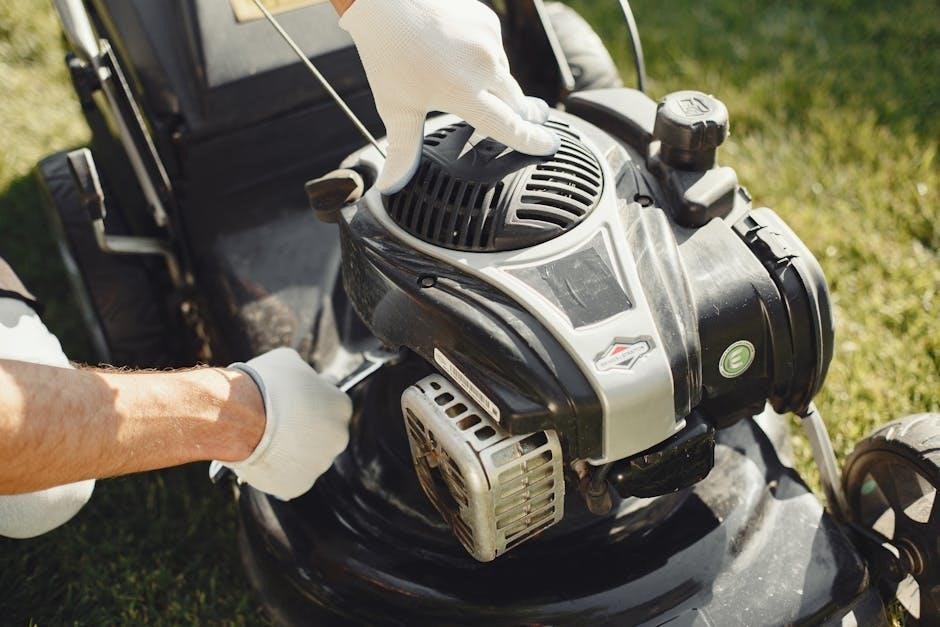
To properly set up the starter rope, first disconnect the spark plug boot from the spark plug – refer to the Engine Operator’s Manual for guidance. Pivot the control handle against the upper handle and carefully pull the rope out of the engine. Loop the rope through the eye bolt, ensuring a secure connection as illustrated in Figure 3.
Tighten the eye bolt to the handle using the lock nut, but DO NOT overtighten. Consult the Engine Operator’s Manual for additional engine-specific information. A correctly installed starter rope ensures reliable engine starting. Regularly inspect the rope for wear and tear, replacing it if necessary for continued safe operation.
Disconnecting the Spark Plug Boot
Before initiating the starter rope set-up, a crucial safety step is disconnecting the spark plug boot from the spark plug. This prevents accidental engine starting during the process, minimizing the risk of injury. Locate the spark plug on the engine – detailed diagrams are available in the Engine Operator’s Manual.
Gently pull the spark plug boot straight off the spark plug. Avoid pulling on the wire itself, as this could damage it. Ensure a firm grip on the boot for a clean disconnection. Refer to the Engine Operator’s Manual for specific instructions related to your engine model. This simple precaution is vital for a safe and successful starter rope installation.
Looping the Rope Through the Eye Bolt
With the control handle pivoted against the upper handle and the starter rope pulled from the engine, the next step involves looping the rope through the eye bolt. Carefully thread the end of the rope through the opening of the eye bolt, creating a secure loop. Ensure the loop is large enough to accommodate the eye bolt without excessive strain or slippage.
Refer to Figure 3 in the documentation for a visual representation of this process. A properly formed loop is essential for effective starter rope function. Avoid creating a knot, as this can impede the rope’s movement. Double-check that the rope is correctly positioned before proceeding to tighten the eye bolt.
Tightening the Eye Bolt and Lock Nut
After looping the rope through the eye bolt, secure it by tightening the eye bolt to the handle using the provided lock nut. Apply firm pressure while turning the nut clockwise, ensuring a snug fit. However, DO NOT overtighten, as this could damage the eye bolt or the handle itself.
The lock nut serves to prevent the eye bolt from loosening during operation. Confirm the lock nut is securely fastened against the eye bolt. Refer to the Engine Operator’s Manual for specific torque recommendations, if available. Regularly check the tightness of the eye bolt and lock nut during maintenance to ensure continued safe operation of the starter system.

Operation Instructions
Familiarize yourself with starting, fueling, and control handle operation for safe and efficient use of your Cub Cadet ST100, as detailed within.
Starting the Engine
Before attempting to start your Cub Cadet ST100, ensure the blade is disengaged and the parking brake is securely applied. Always refer to the Engine Operator’s Manual for specific engine starting procedures. Begin by priming the engine, if equipped, following the instructions in the engine manual.
Grip the control handle firmly and position yourself for a comfortable and controlled start. Slowly pull the starter rope with a smooth, deliberate motion. Avoid jerking the rope, as this can damage the starter mechanism.
Once the engine starts, gradually release the starter rope and allow the engine to warm up before engaging any attachments or beginning operation. Remember to always disconnect the spark plug boot before performing any maintenance or adjustments.
Fueling Procedures
When fueling your Cub Cadet ST100, exercise extreme caution as gasoline is highly flammable and its vapors are explosive. Always fuel the machine outdoors in a well-ventilated area, away from any sources of ignition – cigarettes, sparks, or open flames. Ensure the engine is completely cool before refueling.
Before the initial use, add the provided oil to the engine as instructed. Subsequently, service the engine with gasoline, strictly adhering to the guidelines detailed in the Engine Operator’s Manual. Use the correct fuel grade as specified by Cub Cadet.
Never overfill the fuel tank, and wipe up any spills immediately. Refer to the Engine Operator’s Manual for detailed information regarding fuel specifications and safe handling practices.
Gasoline Handling Warnings
Gasoline is extremely flammable and poses a significant fire and explosion hazard. Always use extreme care when handling it. Never fuel the machine indoors, or while the engine is running or still hot. Extinguish all sources of ignition – cigarettes, cigars, pipes, and open flames – before refueling.
Avoid inhaling gasoline vapors, and prevent skin contact. If gasoline spills on your skin, wash it immediately with soap and water. Store gasoline in a cool, dry, well-ventilated area, away from heat, sparks, and open flames, and out of the reach of children.
Always refer to the Engine Operator’s Manual for comprehensive safety guidelines and specific recommendations regarding gasoline handling and storage.
Adding Oil Before First Use
Before operating your Cub Cadet ST100 for the first time, it is crucial to add the provided oil to ensure proper engine lubrication. This initial oil charge is essential for preventing premature wear and tear on internal engine components. Carefully check the oil level using the dipstick, and add oil as needed to reach the “full” mark.
Refer to the Engine Operator’s Manual for the specific oil type and capacity recommended for your engine. Using the incorrect oil can negatively impact performance and potentially void your warranty. Ensure the mower is on a level surface during this process for an accurate oil level reading.
Proper initial oiling sets the foundation for long-lasting engine reliability.
Servicing with Gasoline – Refer to Engine Manual
When servicing your Cub Cadet ST100 with gasoline, always consult the detailed instructions provided in the Engine Operator’s Manual. This manual contains critical information regarding the recommended fuel type, octane rating, and any specific fuel additives that may be required or prohibited.
Exercise extreme caution when handling gasoline, as it is highly flammable and its vapors are explosive. Never fuel the machine indoors, while the engine is hot, or while it is running. Extinguish all sources of ignition, including cigarettes, cigars, and pipes, before refueling.
Proper fueling procedures, as outlined in the Engine Operator’s Manual, are vital for safe and efficient operation.
Operating the Control Handle
The control handle on your Cub Cadet ST100 is central to safe and effective operation. Before starting, ensure the handle is securely positioned and locked into place. To initiate movement, firmly grip the handle, engaging the blade control lever simultaneously.
Pivot the control handle against the upper handle to access components like the starter rope, as needed for maintenance. Release the blade control lever to immediately disengage the blade and stop forward motion.
Familiarize yourself with the handle’s functions and safety features detailed in the full operator’s manual for optimal control and a secure mowing experience.

Maintenance
Regular maintenance, including oil checks, air filter cleaning, and blade inspections, is crucial for preserving the performance and extending the life of your ST100.
Regular Maintenance Schedule
Maintaining your Cub Cadet ST100 requires a consistent schedule to ensure optimal performance and longevity. Before each use, visually inspect the mower for any loose parts, damage, or fuel leaks. After every five hours of operation, check the engine oil level and add if necessary, referencing the Engine Operator’s Manual for the correct type.
Every 25 hours, clean the mower deck to prevent buildup and corrosion. After 100 hours, or annually, replace the air filter and spark plug. Sharpen or replace the blades as needed, ensuring proper balance. Periodically, inspect and tighten all bolts and fasteners. Always consult the Engine Operator’s Manual for detailed engine maintenance procedures and schedules. Following this schedule will help keep your ST100 running smoothly for years to come.
Engine Oil Checks and Changes
Regular engine oil maintenance is crucial for the longevity of your Cub Cadet ST100. Before each use, check the oil level using the dipstick, ensuring it falls within the “full” range. Add oil, as needed, using the recommended type specified in the Engine Operator’s Manual.
For the first use, always add oil provided before starting the unit. Change the oil after the first 25 hours of operation, and then every 50 hours thereafter, or annually. When changing the oil, ensure the engine is warm, but not hot, and dispose of the used oil responsibly. Refer to the Engine Operator’s Manual for detailed instructions on oil changing procedures and the correct oil capacity. Maintaining proper oil levels ensures smooth engine operation and prevents premature wear.
Air Filter Maintenance
Maintaining a clean air filter is vital for optimal engine performance of your Cub Cadet ST100. Regularly inspect the air filter for dirt and debris. Clean the filter by gently tapping it to remove loose particles, or use compressed air, blowing from the inside out.
Replace the air filter when it becomes excessively dirty or damaged – typically after every 25 hours of operation, or more frequently in dusty conditions. A clogged air filter restricts airflow, reducing engine power and efficiency. Refer to the Engine Operator’s Manual for specific instructions on air filter location, removal, cleaning, and replacement procedures. Proper air filter maintenance ensures clean air reaches the engine, prolonging its life and maximizing performance.
Troubleshooting
This section details common issues with the Cub Cadet ST100, offering solutions for engine starting problems and blade-related concerns for smooth operation.
Common Issues and Solutions
Encountering problems with your Cub Cadet ST100 is often easily resolved with a bit of troubleshooting. A frequent issue is difficulty starting the engine; ensure fresh gasoline is used and the spark plug boot is securely connected, referencing the Engine Operator’s Manual for specifics.
Blade issues, such as uneven cutting or excessive vibration, can stem from dull or damaged blades. Regularly inspect and sharpen or replace blades as needed. Always disconnect the spark plug boot before performing any blade maintenance for safety.
If the unit fails to start, double-check fuel levels and oil levels. Consult the manual for detailed diagnostic steps and potential solutions, prioritizing safety throughout the process. Remember, proper maintenance prevents many common problems!
Engine Starting Problems
Difficulty starting your Cub Cadet ST100 often points to a few key areas. First, verify you’re using fresh gasoline, as old fuel can degrade and hinder ignition. Ensure the spark plug boot is firmly connected to the spark plug – a loose connection prevents the engine from firing.
If the engine cranks but doesn’t start, consult the Engine Operator’s Manual for specific troubleshooting steps related to the carburetor or fuel system; A clogged air filter can also restrict airflow, making starting difficult.
Remember to disconnect the spark plug boot before inspecting or cleaning any engine components. Always refer to the manual for detailed instructions and safety precautions when addressing engine starting issues.
Blade Issues
Experiencing poor cutting performance? Blade issues are a common concern. Dull blades will tear grass instead of cutting cleanly, resulting in an uneven lawn. Regularly inspect the blade for damage – nicks, bends, or cracks – and replace it if necessary.
Ensure the blade is securely fastened to the mower deck. A loose blade is extremely dangerous and can cause serious injury. Always disconnect the spark plug boot before inspecting or working on the blade.
Refer to the manual for the correct blade replacement procedure and torque specifications. Proper blade installation is crucial for safe and effective operation. Maintaining sharp blades ensures a healthy, well-manicured lawn.

Parts Diagram and Identification
Locate components easily using the detailed diagram and understand part numbers for efficient ordering and maintenance of your Cub Cadet ST100.
Locating Parts in the Diagram
The parts diagram is a crucial resource for identifying components of your Cub Cadet ST100. Each illustration clearly depicts the assembly, and individual parts are labeled with corresponding numbers. To effectively use the diagram, begin by identifying the specific assembly you’re working with – for example, the engine, deck, or control handle.
Once the assembly is located, find the part you need within that illustration. The number next to the part corresponds to a listing in the parts list section of this manual. Pay close attention to detail, as similar-looking parts may have different numbers.
Exploded views showcase how parts fit together, aiding in reassembly. Remember to cross-reference the diagram with the parts list to ensure you have the correct part number before ordering replacements. This will guarantee compatibility and a successful repair.
Understanding Part Numbers
Cub Cadet ST100 part numbers are unique identifiers essential for ordering replacements. These numbers, found in the parts diagram and parts list, ensure you receive the correct component for your machine; A typical part number consists of a series of digits and sometimes letters, providing specific information about the part’s design and application.
When ordering, always provide the complete part number to avoid errors. Variations in even a single digit can result in receiving an incorrect part. The parts list organizes numbers logically by assembly, making it easier to locate the required number.
Consulting the diagram alongside the parts list is crucial for verification. Double-check the part’s appearance and function against the illustration to confirm you’ve identified the correct component before placing your order.

Additional Resources
For further assistance, refer to the Engine Operator’s Manual or contact Cub Cadet support directly for expert guidance and detailed information.
Engine Operator’s Manual Reference

The Engine Operator’s Manual is a crucial supplementary resource for your Cub Cadet ST100. It contains detailed specifications and procedures specific to the engine powering your unit, going beyond the scope of the main ST100 manual.
Specifically, it provides in-depth guidance on gasoline handling, emphasizing safety precautions due to the flammable nature of fuel and explosive vapors. It details proper fueling techniques, advising against indoor fueling or operation while the engine is hot.
Furthermore, the Engine Operator’s Manual outlines the initial oil addition procedure before the first use, and provides comprehensive instructions for ongoing engine servicing with gasoline. Referencing this manual is essential for understanding spark plug boot disconnection procedures and tightening specifications for the starter rope eye bolt and lock nut – avoiding overtightening is key!
Contacting Cub Cadet Support
For further assistance beyond this manual, Cub Cadet offers multiple avenues of support to ensure a positive ownership experience with your ST100. Their dedicated support team can address specific questions, clarify procedures, or assist with troubleshooting issues not fully covered in the documentation.
Owners can typically find helpful resources, including FAQs and online support forms, on the official Cub Cadet website. Direct contact options, such as a customer service phone number, are also usually available for personalized assistance.
When reaching out, having your ST100’s model number and serial number readily available will expedite the process. This information allows support representatives to quickly access relevant details about your specific unit and provide accurate guidance. Don’t hesitate to utilize these resources for optimal product utilization.